Choosing the right deployment platform depends on your app’s needs: edge performance, backend flexibility, real-time support, or budget. This guide reviews ten strong Vercel alternatives, summarizes key benefits, and compares each one briefly so you can decide quickly.
Table of contents
What Is Vercel & Why Is It Popular?
Vercel is a cloud platform for static sites and frontend frameworks. It is designed to host websites and web applications with zero configuration, handling the complex infrastructure work (like servers, scaling, and global distribution) so developers can focus purely on coding.
Think of it as the “Apple of hosting”: it might be slightly more expensive or closed-garden than building your own server, but it offers a polished, seamless experience that “just works.”
Why Is Vercel So Popular?
Vercel is popular because it makes deployment effortless and fast. It connects directly to Git, creates automatic preview links, and ships updates the moment teams push code. Developers like tools that remove friction, and Vercel leads here.
It also optimizes performance with edge hosting and tight framework support, especially for Next.js. This focus helps teams load sites faster, scale easily, and keep a clean workflow, which boosts productivity.
Benefits of Vercel
Vercel’s rise to dominance in the web development world (specifically the JavaScript/React ecosystem) comes down to five key factors:
- Zero-Configuration: Auto-detects frameworks (Next.js, React, Vue) and deploys instantly.
- Git Integration: Deploys automatically whenever you
git push. - Preview URLs: Creates a unique live link for every code change/branch.
- Global Speed: serves your site from a fast, global Edge CDN.
- Serverless Functions: Runs backend API code without managing servers.
- Auto-HTTPS: Automatically provides free SSL certificates.
- Instant Rollbacks: Revert to previous versions with one click.
- Collaboration: Teams can comment directly on preview deployments.
- Free Tier: Generous limits for personal projects and hobbyists
Cons of Vercel
- No persistent or long-running servers
- Serverless cold starts
- Function execution time limits
- Limited local file system in functions
- Build timeout caps
- Monorepo caching constraints
- Edge function runtime restrictions
- Limited native DB (external only)
- Restricted background jobs/support
- Constrained WebSocket support
Best Alternatives to Vercel
Explore the 10 best alternatives to Vercel for modern web deployments. Compare features, technical strengths, and ideal use cases to pick the right hosting platform for your project.
Here is the breakdown of the best Vercel alternatives for late 2025:
Netlify

Netlify is a cloud platform that streamlines building, deploying, and hosting modern web projects, especially Jamstack and static sites. Furthermore, it connects directly to Git and automates builds and deployments, so teams move from code to live URLs quickly.
Additionally, developers get fast CDN-backed delivery and easy preview environments for pull requests. Netlify focuses on removing deployment friction so teams can iterate faster.
Benefits:
- Git-based CI/CD
- Instant deploy previews
- CDN-backed global delivery
- Built-in form handling
- Serverless functions support
- Simple CLI and UI
- Free starter plan + generous limits
- Continuous rollbacks
Why it’s a top Vercel alternative:
- Easier Jamstack-first workflow for static sites
- More mature built-in CMS/form tools out of the box
- Simpler pricing for small-to-medium projects
- Stronger focus on non-Next.js static workflows
- Straightforward developer UX for beginners and teams
Cloudflare Pages
Cloudflare Pages is a Jamstack-oriented platform that deploys sites directly from Git with fast build pipelines. Also, it serves content from Cloudflare’s global edge network to minimise latency for users worldwide.
Moreover, developers get instant preview deployments for pull requests and easy integration with Cloudflare Workers for edge logic. Furthermore, the platform prioritises performance, security, and scale with minimal operational overhead.
Benefits:
- Git-based CI/CD
- Global edge CDN
- Instant deploy previews
- Cloudflare Workers integration
- Fast build pipelines
- Automatic SSL & DNS
- DDoS protection & WAF
- Generous free tier
Why it’s a top Vercel alternative:
- Superior global edge footprint
- Lower latency for edge-served content
- Built-in DDoS/WAF security advantages
- Native Workers for edge compute
- Often more cost-effective for high-edge traffic
Render:
Render provides a unified platform for hosting web services, static sites, and background workers with minimal ops overhead. Moreover, it supports Docker, native builds, managed PostgreSQL, and cron jobs so teams can run full-stack apps in one place.
Additionally, developers get automatic deploys from Git, pull-request previews, and straightforward scaling controls. Moreover, render targets teams that need both frontend hosting and reliable backend services without a complex cloud setup.
Benefits:
- Git-based CI/CD
- Supports Docker and containers
- Managed databases (Postgres)
- Background workers & cron jobs
- Autoscaling for services
- Simple service and infra UI
- Native TLS and custom domains
- Predictable pricing tiers
Why it’s a top Vercel alternative:
- Better support for full-stack apps (long-running services + static)
- Allows persistent processes and background jobs. Vercel does not
- Easier managed database offerings vs. Vercel’s external-only approach
- More flexible container/Docker support for custom runtimes
- Simpler choice for teams needing backend + frontend in one platform
DigitalOcean App Platform:
DigitalOcean App Platform is a managed cloud service that deploys apps from Git repos or container images with minimal infrastructure work. It handles static sites, web services, serverless functions, and managed databases so teams run full-stack apps without managing servers.
Additionally, developers get automatic builds, simple scaling controls, and predictable pricing that suit small-to-medium projects. Furthermore, the platform also focuses on straightforward operations and clear resource management for engineering teams.
Benefits:
- Git & container deploys
- Docker/native container support
- Managed databases (Postgres, MySQL)
- Serverless functions
- Auto-scaling options
- App-level metrics & logs
- Built-in SSL & CDN
- Predictable, usage-based pricing
Why it’s a strong Vercel alternative
- Better native container and Docker support
- Built-in managed databases (less external wiring)
- Clearer scaling and resource controls for services
- More straightforward pricing for sustained workloads
- Suits teams that need full-stack infra, not just frontend hosting
Heroku:
Heroku is a platform-as-a-service that hosts full-stack apps with long-running dynos, managed add-ons, and container support. Also, it deploys directly from Git with a focus on simplicity over edge-first performance.
Moreover, developers can also run background workers, scheduled jobs, and WebSockets, making it reliable for real-time and persistent workloads. Thus, teams choose Heroku when they want fast iteration without managing core infrastructure manually.
Benefits:
- Git deploys + CI/CD
- Long-running servers (dynos)
- Background workers
- Cron/scheduler jobs
- WebSocket support
- Add-on marketplace
- Container registry support
- Solid logging
Why it’s a strong Vercel alternative:
- Supports persistent, long-running services (Vercel does not)
- Works better for WebSockets and real-time apps
- Offers managed add-ons for faster backend setup
- Less restrictive for server execution models
- Better fit for backend-heavy or stateful workloads
Firebase Hosting
Firebase Hosting is Google’s managed web hosting service tailored for developers building web and mobile apps. Also, it emphasizes tight integration with the Firebase ecosystem and Google Cloud to simplify app delivery and operations.
Additionally, teams pick Firebase Hosting when they want a hosting solution that works seamlessly with their real-time databases, auth, and serverless backends. Moreover, the platform targets fast iteration and predictable scalability for production web assets and single-page apps.
Benefits:
- Global CDN delivery
- Free starter tier
- Automatic SSL provisioning
- Fast atomic deploys
- Easy Git/GitHub integration
- Works with Cloud Functions/Serverless
- Simple custom domain setup
- Strong Google Cloud reliability
Why it’s a strong Vercel alternative:
- Tighter native integration with Firebase services
- Better fit for real-time/mobile-first apps
- Direct access to Google Cloud infra and tooling
- Simplifies combining hosting with auth/database/storage
- Predictable pricing for Google ecosystem users
Kuberns
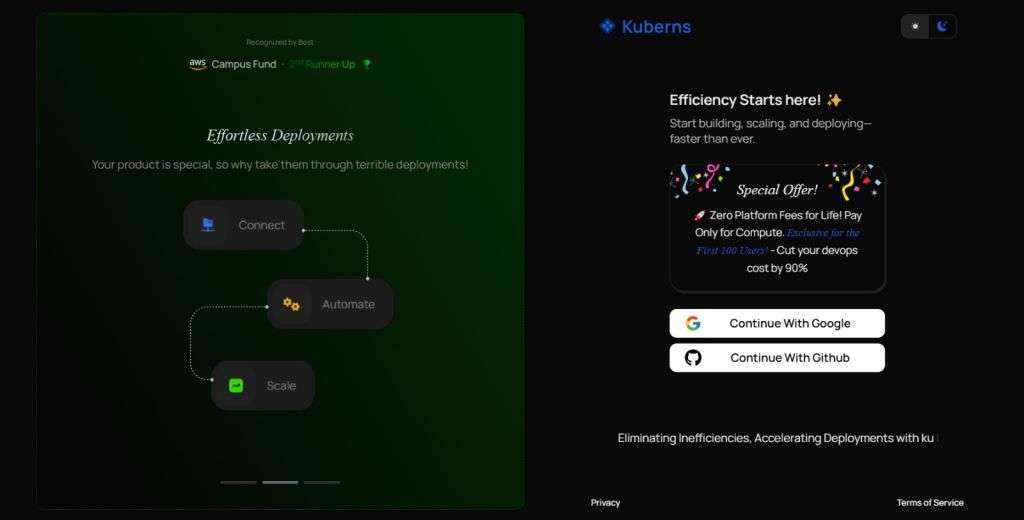
Kuberns is the world’s first Agentic Deployment Platform. You connect your GitHub repo and an AI agent handles your entire deployment automatically. Build detection, infrastructure setup, environment configuration, scaling, and monitoring all happen on their own. No config files, no YAML, nothing to set up manually.
Most platforms still require you to configure your deployments yourself. Kuberns removes that entirely.
Benefits:
- Connects to your GitHub repo and deploys automatically
- AI agent handles the full deployment from start to finish
- No config files or YAML needed
- Handles build detection, environment setup and scaling on its own
- Works for full-stack apps, not just frontends
- No infrastructure knowledge required
Why it’s a strong Vercel alternative:
- Vercel is great for frontends but still needs manual setup for anything beyond that
- Kuberns handles full-stack deployments end to end
- No cold starts or function time limits to work around
- Supports long-running services that Vercel doesn’t
- Good fit if you want deployment to just work without the ops overhead
AWS Amplify
AWS Amplify is a suite of AWS tools and managed services that help developers build, deploy, and host full-stack web and mobile apps quickly. Moreover, it bundles a CLI, libraries, and a hosting pipeline that connects frontends to AWS backends like Auth, APIs, and Storage.
Furthermore, Amplify also automates CI/CD from Git, supports multiple environments, and simplifies provisioning of serverless resources. Therefore, teams pick Amplify when they want an AWS-native, scalable workflow that ties frontend delivery to robust cloud services.
Benefits:
- Deep AWS service integration
- Managed hosting + CI/CD
- GraphQL (AppSync) support
- Built-in authentication (Cognito)
- S3-backed storage & file hosting
- Serverless backend integration (Lambda)
- Multi-environment workflows
- Amplify CLI & client libraries
- Scalable pay-as-you-go pricing
- Built-in analytics
Why it’s a strong Vercel alternative:
- Direct, first-class connectivity to AWS backends
- Better suited for mobile + web hybrid apps
- Simplifies wiring of auth, storage, and databases
- Scales using AWS infra for enterprise needs
- Stronger tooling for backend-driven workflows
Coolify
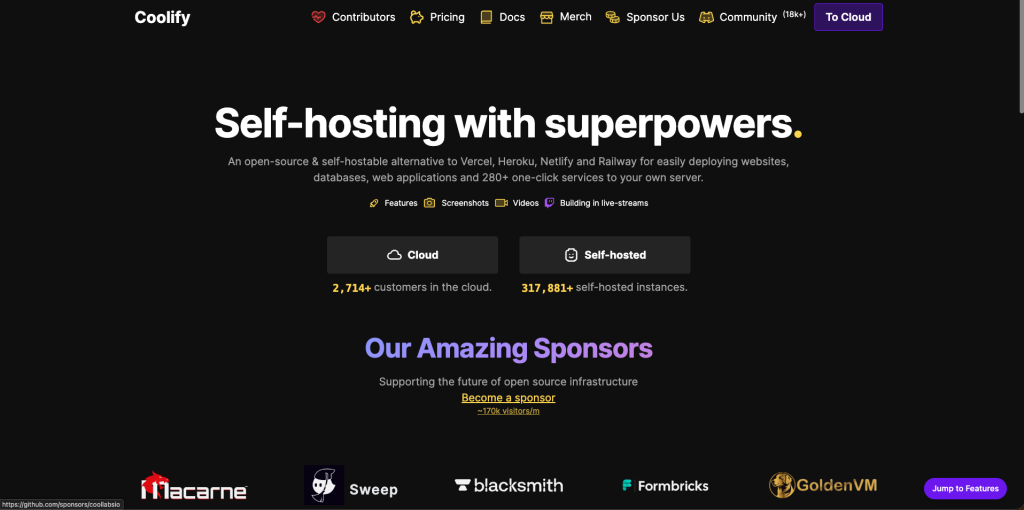
Coolify is a self-hosted, Docker-first control plane that provides Git-driven deploys, previews, and service management you run on your infrastructure. Additionally, teams choose it when they need full control, on-prem options, or want to avoid vendor lock-in.
Benefits
- Self-hosted control plane
- Docker-native deploys
- Git-based CI/CD
- Preview environments
- Cron jobs & background tasks
Why it’s a top Vercel alternative
- Eliminates hosted vendor dependency
- Full server control and customization
- Good for teams needing on-prem or private infra
Check out the Materio NextJS Admin Template.

This is one of the best Vercel Template to use for professional web apps.
Surge
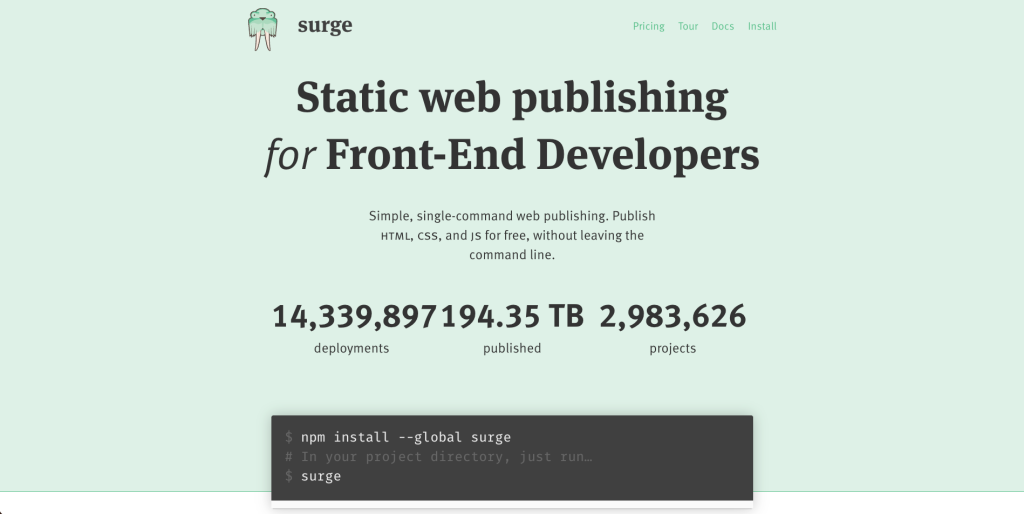
Surge is a minimal, CLI-first static hosting service that deploys HTML, CSS, and JS with a single command.
It targets designers and developers who need instant, no-friction static site publishing and simple DNS management.
Additionally, Surge prioritizes speed of iteration and an ultra-light developer experience over complex build pipelines. Furthermore, teams use it when they want the fastest path from local files to a live URL with minimal configuration.
Benefits:
- Single-command CLI deploys
- Instant static site hosting
- Custom domain support
- CDN-backed delivery
- Free/tiny-project friendly plan
- Very low operational overhead
Why it’s a strong Vercel alternative:
- Simpler for pure static sites (no serverless complexity)
- Faster local-to-live workflow for small projects
- Lower cost and friction for basic deployments
- Ideal for designers or content sites that need zero ops
Flyo.io
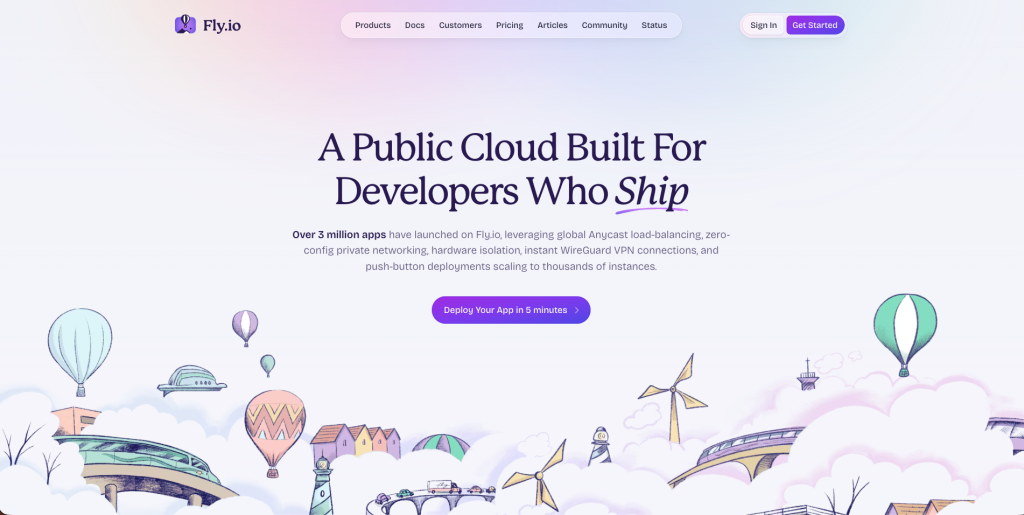
Fly.io runs apps close to users by deploying lightweight VMs at the edge, supporting both static and dynamic workloads. It lets you run long-running processes, WebSockets, and Docker containers with low latency and global placement.
Furthermore, developers choose Fly.io when they need real-time features, stateful services, or precise control over runtime environments. Additionally, the platform blends edge performance with more traditional server capabilities.
Benefits:
- Global edge VMs
- Docker & custom runtime support
- Long-running processes & WebSocket support
- Persistent volumes available
- Low-latency regional placement
- Flexible networking and TCP support
Why it’s a strong Vercel alternative:
- Supports long-running/stateful apps (Vercel is serverless-first)
- Better for real-time and WebSocket workloads
- Offers true VM-level control vs. function runtimes
- Stronger networking and persistent storage options
How to pick the right alternative
- Choose Netlify or Cloudflare Pages for Jamstack sites and marketing frontends that need fast previews and edge delivery.
- Pick Render, DigitalOcean, or Heroku when you require long-running services, managed databases, or background workers.
- Use Fly.io for low-latency, real-time apps and WebSocket-heavy workloads.
- Select Firebase or Amplify when you want tight mobile/backend integrations with Google or AWS ecosystems.
- Consider Surge or Coolify when you need extreme simplicity (Surge) or full self-hosted control (Coolify)
Conclusion:
Vercel remains the go-to when you prioritise a frictionless frontend workflow, instant Git-driven previews, and tight Next.js/edge integration; it accelerates iteration and simplifies delivery for teams focused on modern static and hybrid frontends.
However, no single platform fits every use case; trade-offs exist between edge performance, backend flexibility, persistent processes, and ecosystem integrations.
No single platform beats all others; each alternative trades off edge performance, backend flexibility, cost, and control. Assess your stack (static vs. dynamic), runtime needs (serverless vs. long-running), and ecosystem ties (AWS/Google/self-host) to pick the best fit.