


Looking for practical side income tips for developers and web designers? Whether you’re a full-time professional or a freelancer, there are several ways to earn extra income using your existing skills. From building websites to selling digital products and templates, these opportunities can help you create additional income streams.
Most developers who pick up side work end up selling the same thing they sell all week: hours. A landing page for a friend’s bakery on Friday night, a broken checkout on Saturday afternoon. It pays, but it never compounds, and it eats the evenings you meant to keep for yourself.
Bankrate’s 2025 Side Hustle Survey put the median American side hustler’s income at $200 a month. Designers and developers can beat that median because the work they finish can be resold, licensed or put on a subscription.
A plumber can’t sell last month’s repair twice, but you can sell last month’s dashboard to a stranger in another country. The tips below favor income that keeps arriving after the hours stop, and each one starts from something you have probably built already.
6 Side Income Tips for Web Designers and Developers
Pick the wrong one, and you end up with a second job that pays like a hobby, so match each option against what is already sitting in your repos and inbox.
Open a Print-on-Demand Store for a Niche You Already Know
Designers already have the hardest part of a product business, which is artwork people want to buy. A store built around custom embroidery can start on print-on-demand platforms like Printify, which pass each order to a global network of print providers who stitch, pack and ship it, so you never buy stock or a single machine.
Print-on-demand changes the usual retail math. You set your own price, the platform charges you its base cost only after a customer pays, and the difference is your margin. Printify connects to Etsy, Shopify, TikTok Shop and Amazon, so you can test a design on a marketplace before you build a storefront of your own.
Choose a niche you can describe in one sentence, such as cycling clubs, night-shift nurses or retro gaming fans. A cap with one bold mark outsells a busy logo, because embroidery works best with simple shapes and a few thread colors. Order a sample of every product to check the stitching yourself, and tell buyers to expect 2 to 7 business days before an order ships.

Turn Finished Client Sites Into Monthly Care Plans
The easiest client to sell to is the one whose site you shipped last month. Offer a flat monthly fee for updates, backups, uptime checks, and an hour of small edits, and pitch it in the handover call, when the owner is most nervous about breaking something. On WordPress sites, that nervousness is justified: Patchstack’s State of WordPress Security in 2026 counted 11,334 new vulnerabilities across the WordPress ecosystem in 2025.
Price the plan against what a day of downtime would cost the business, and keep your own minutes out of the conversation. At $75 a month, 10 sites bring in $750 whether or not you open your editor. Keep the routine under an hour per site: update a staging copy, run regression tests on forms and checkout, then push. Write that checklist down once, detailed enough that a contractor could run it without calling you, the same logic that pushes growing companies to formalize new-hire onboarding instead of leaving it to a slide deck.
Sell the Components You Keep Rebuilding
Look at your last 5 projects and count how often you built the same settings page, pricing table, or sidebar navigation. That repeat work is a product. Package it as a template, UI kit, or component set with proper documentation, and pick the stack with the most buyers: in the 2025 Stack Overflow Developer Survey, 46.9% of professional developers reported extensive React work over the past year.
Your buyer has already weighed a template or a custom build and decided their hours belong on the logic only they can write. Sell to that decision by stating how many hours your kit saves on the first working screen. Then keep it current, because a kit that falls 2 major versions behind its framework stops selling.
Build a Micro SaaS Around a Single Client Complaint
Client work hands you product ideas nobody else sees, like the spreadsheet a dental office emails around every Monday or the booking rules a gym owner explains to each new hire. Choose a problem you have heard from at least 3 different clients and build only the tool that fixes it. Keep expectations honest: MicroConf’s 2024 State of Independent SaaS report, drawn from 469 independent SaaS founders, found 28% of their companies earning under $1,000 in monthly recurring revenue, the largest single group in the survey.
As side income, $800 a month in subscriptions is a solid result, provided you didn’t spend 6 months coding sign-up screens to reach it. Spend your build time on the 1 workflow the clients actually described. Then set aside hours for the dull failures, such as auth bugs that only appear in production.
Get Paid to Write the Tutorials You Wish Existed
B2B SaaS companies still buy a large share of their content from outside writers. Benchmarker’s 2026 B2B SaaS content benchmarks found that 47% of the 321 SaaS content teams surveyed outsource between 26% and 50% of their content production. A tutorial whose code has to run is the hardest piece for a generalist to deliver, which is exactly where a working developer has the edge.
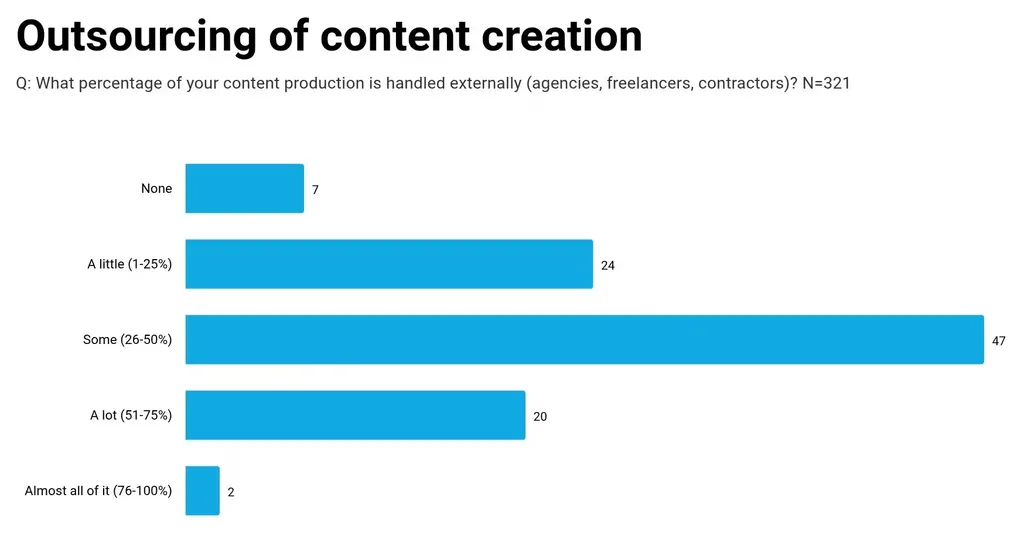
Start with the integration you fought last month. Pitch the companies whose docs left you stuck, offer a working tutorial with a public repo, and quote per piece. Each published article also works as a portfolio sample for every future client who searches your name.
Teach the Workflow You Know Cold
Courses that promise complete web development compete with free playlists and usually lose. Narrow topics sell because the buyer is stuck in that exact mess this week: moving a client site from Webflow to Next.js, building forms that pass an accessibility audit, or setting up Figma variables a developer can actually use.
Run it live before you record anything. A 3-session cohort of 15 people shows you which parts confuse students, and the edited recordings become the self-paced version you sell afterwards. Charge from the first cohort, since paying students show up and give sharper feedback.
Where to Start This Month
Choose a single path and give it 90 days. Splitting 6 spare hours a week across 3 ideas is how side projects die in the setup stage, before a single customer sees them.
Start with whichever path reuses work you already own: a client list for care plans, a folder of components for a template, a recurring complaint for a micro SaaS. Block the hours in your calendar and guard them like a client deadline.
If the template or micro SaaS route wins, ThemeSelection’s SaaS starter kits and admin templates give you coded dashboards in Next.js, Laravel, React, and Vue, so your first weekend goes into the feature buyers want. Pick the kit that matches your stack and ship a working beta before the month ends.

