The digital transformation movement is sweeping the world, and this has had an impact on every aspect of modern business – few more so than web design and development. User needs are continuously evolving, and with digital technology being rapidly iterated upon, we need to evolve our processes to stay at the forefront of the digital frontier.
At the same time, while the benefits of utilizing the latest tech may be abundant, the reality remains that introducing and implementing new technologies successfully can be surprisingly tough at times. As any expert digital transformation source will inform you, the journey is one fraught with challenges and potential pitfalls, for a variety of reasons. In this piece, we will discuss what exactly those reasons are, where these challenges stem from, and how you can mitigate and ultimately overcome them to achieve more with your web design.
Table of contents
Trends Driving the Need for Digital Transformation
Web design is an ever-evolving field, but in recent times, there several trends in particular have been changing how we create sites. First and foremost is the emphasis on a mobile-first approach. Unsurprising, perhaps, given that the majority of all Internet traffic now comes from mobile devices.
In the age of personalization, responsive design has also become a core tenet of how we design modern websites. Adopting digital transformation services can help design agencies streamline their workflows while enhancing their capability to deliver personalized user experiences. In many cases, collaborating with a System Integrator can further simplify the process by ensuring new tools and platforms work seamlessly together. As developers and designers, we have to strive to create experiences that can be adapted to individual users. Likewise, there is an increasing expectation that our sites should incorporate additional functionalities to the UX by adding microinteractions like tooltips, welcome tours, share buttons, and animated CTAs.
Simply put, web design is becoming more complex, and in order to implement all of these principles, we need to develop wider and deeper skill sets than we’ve ever had. As teams expand to meet these demands, many agencies are also adopting AI recruiting software to identify and hire designers and developers with the right mix of technical and creative skills more efficiently
Aside from being familiar with standard contemporary frameworks like Tailwind CSS, we also need to be proficient with interactive design tools like Adobe XD or Figma, and to understand how to leverage automation and machine learning tools to integrate personalized features.
These trends in our industry highlight the growing complexity and diversity of modern web design tools, underscoring the pressing need for digital transformation. To create truly engaging user experiences, we as designers need to embrace contemporary innovations and methodologies, but this can prove a sticking point at many agencies.porary innovations and methodologies, but this can prove a sticking point for many top web design agencies.
Challenges in Digital Transformation
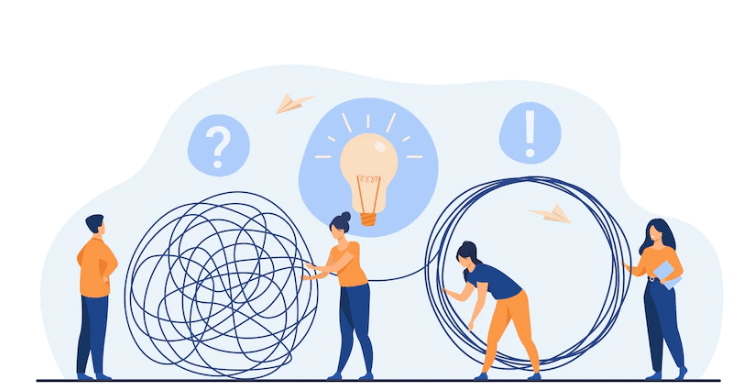
So, where exactly do the challenges of digital transformation lie? The following are some key areas that commonly present issues.
1. The complexity of new technologies
As we’ve touched on, modern web design tools and frameworks are often rather complex and can require significant time and effort to get to grips with. The technologies have steep learning curves which can prove challenging for busy designers to tackle effectively in the time they have available. This added complexity results in slow adoption rates, hindering overall productivity, and can potentially even end up in complete abandonment.
2. Resistance to change
In instances where designers have gotten used to more traditional design processes, they may resist the implementation of new methods and tools. Often, this stems from a lack of understanding or appreciation of what new technologies bring and exactly how they fit into their day-to-day duties. Nonetheless, this kind of pushback can significantly hamper the transformation process and potentially cause transformation initiatives to fail altogether.
3. Resource restraints
Another factor that can pose a challenge is the cost of facilitating transitions to new technologies, both in terms of time and money. Investing in tools themselves comes at a cost, of course, but often training can be equally if not more expensive, as it involves paying for training software and also dealing with the downtime required for software onboarding. For agencies operating on smaller scales, the cost of switching to more modern solutions can be prohibitive.
Mitigating Transformation Challenges
Now that we’ve established some of the primary obstacles to digital transformation, let’s discuss some positive solutions that can help web design agencies to mitigate them. The following strategies can help reduce the pressure on employees and facilitate an environment in which digital transformations are more likely to succeed.
1. Implementing incremental changes
Evolving with the times is always a positive thing, but too much change at once can be detrimental to progress, as we’ve mentioned. Rather than opting to bring in a host of new solutions all at once to completely overhaul processes, we need to adopt a more gradual, phased approach to our digital transformation journeys.
Implementing incremental changes makes it easier to monitor the effect that each new tool or process has when introduced, and to gauge the response to their introduction. This approach can enable us to make more timely adjustments and to lower the risk of potential disruptions. Furthermore, it helps ensure that designers feel comfortable with the new technologies or methods being implemented before the next phase commences.
This facilitates smoother integration and helps solve some of the factors causing change resistance. Agencies can also support smoother adoption by introducing productivity management software to help track workflows and maintain focus during transition phases.
2. Utilizing Bootstrap themes and UI Kits
Bootstrap themes are widely used because they can offer a ready-to-use framework that can simplify processes for us as designers.
Since they provide pre-created components and require less expertise to utilize, they enable designers to cut down the time and effort required to produce a high-quality website. Similar to Bootstrap themes, UI kits also offer a selection of prefabricated elements.
By using UI kits, designers can streamline their workflows while also maintaining a high level of consistency and solid turnaround times.
Employing Bootstrap themes and UI kits can ease the burdens placed on designers, freeing up valuable time for us to invest in learning other technologies that can help raise the ceiling of the work we produce.
3. Collaborating with digital adoption experts
In addition to easing the pressure on designers, agencies should also seek to partner and consult with experts on digital transformation. Specifically, experts in the field of digital adoption will be able to provide guidance and offer useful insights into the nuances of the process. Moreover, digital adoption companies will be able to provide comprehensive and dynamic support in the form of digital adoption platforms (DAPs).
Leveraging DAPs to Empower Transformations
While mitigating the challenges of digital transformation can help to reduce friction, the continuous nature of the process necessitates a more comprehensive solution. In particular, agencies need to establish a repeatable framework for reliably adopting new technologies, so as not to encounter the same issues with each new implementation. This is where DAPs are key, as they provide a dynamic system that supports users in learning a wide variety of new software tools.
So, let’s delve a little deeper and explore how exactly they do this.
1. Interactivity
DAPs work by overlaying on other software technologies. Through intuitive graphical interfaces, they can provide interactive guides and tutorials that can help users learn all the features of new tools as they use them. This helps to cut down learning curves and reduces downtime by empowering users to learn while they work.
2. Real-time user support
Through the provision of real-time troubleshooting and assistance, DAPS can enable designers to resolve issues as they arise, all without outside intervention. This facilitates smoother adoption and helps people to quickly develop confidence with the technologies at their disposal.
3. Performance insights
DAPs utilize analytics to keep track of how software tools are being utilized. This can help agency stakeholders gain insights about sticking points and highlight areas where additional support could be required in some instances.
4. Performance insights
DAPs can customize the learning experience, providing contextual guidance tailored to the specific needs and skill levels of each user. This improves adoption rates when learning new tools, and boosts employee engagement to facilitate more successful and reliable transitions to new design and development tools.
It’s important to note that DAPs should ideally be utilized as a part of a wider digital adoption strategy.. This means that you should outline clear goals for digital transformation efforts and establish clear, dedicated communication channels for stakeholders to discuss progress and for designers to provide feedback on the tools being implemented.
By enacting these kinds of measures, agencies can ensure that teams are well-equipped to handle the complexities of modern web design tools. Moreover, an adoption-oriented approach can foster a culture of continuous learning and adaptation among design teams, empowering them to embrace and quickly adapt to new cutting-edge design technologies as they emerge.
Summing Up
For our agencies to compete in an evolving web development landscape, we must continually iterate upon our processes to deliver ever-greater user experiences with our sites. This means implementing advanced design technologies to harness the power of digital transformation – an endeavor that comes with challenges all of its own. With the right approach, though, it is possible for us to overcome them and achieve success.
By understanding where the primary obstacles arise in adopting new technologies, we can strategically navigate digital transformation and mitigate issues like skill gaps, employee resistance, and resource constraints. Furthermore, by taking an adoption-oriented approach to digital transformation, supported by the utilization of digital adoption platforms, we can empower ourselves to achieve repeatable success on our journeys. In this way, we can continually enhance and optimize our processes for better web design and more engaging user experiences.