


Selecting a web development company for an online store involves comparing platform expertise, project history, and the level of support offered after launch, not just the number of case studies in a portfolio. The right partner depends on the platform involved, the complexity of the catalogue, and how much ownership a business wants to retain over its own storefront.
This guide profiles eight agencies actively building ecommerce stores today, covering what each one specialises in and the type of business each tends to serve best. A section afterwards outlines how to evaluate any agency directly, along with the pricing structures used across most of these engagements.
Table of Contents
Eight Agencies Worth a Second Look
A quick comparison first, then the full breakdown on each agency below.
| Agency | Platform Focus | Founded / Team | Rating | Best For |
| DigitalSuits | Shopify Plus, headless, migrations | 2016 50+ employees | 4.9/5 (Clutch) | Design, dev, and support in one team |
| Vaimo | Adobe Commerce, Shopify Plus | 2008 500+ employees | 4.8/5 (Clutch) | Complex B2B/B2C on Adobe Commerce |
| Astound Commerce | Salesforce Commerce Cloud | 2000 1,000+ employees | Platinum Partner | Large enterprise, international |
| We Make Websites | Headless Shopify | 200950+ employees | 5.0/5 (82 reviews) | High-traffic custom frontend |
| Eastside Co | Shopify Plus, CRO | 201270+ employees | Shopify Plus Partner | Optimizing an existing store |
| RaftLabs | Shopify + AI features | 201540+ employees | 4.9/5 (Clutch) | Adding AI-driven features |
| Swanky Agency | Shopify Plus, DTC + B2B | 201050+ employees | Shopify Plus Expert | Enterprise/subscription, non-fashion B2B |
| Folio3 | Shopify/BigCommerce/Adobe + ERP | 2014 250+ employees | 4.9/5 (Shopify dir.) | ERP-integrated B2B storefronts |
DigitalSuits
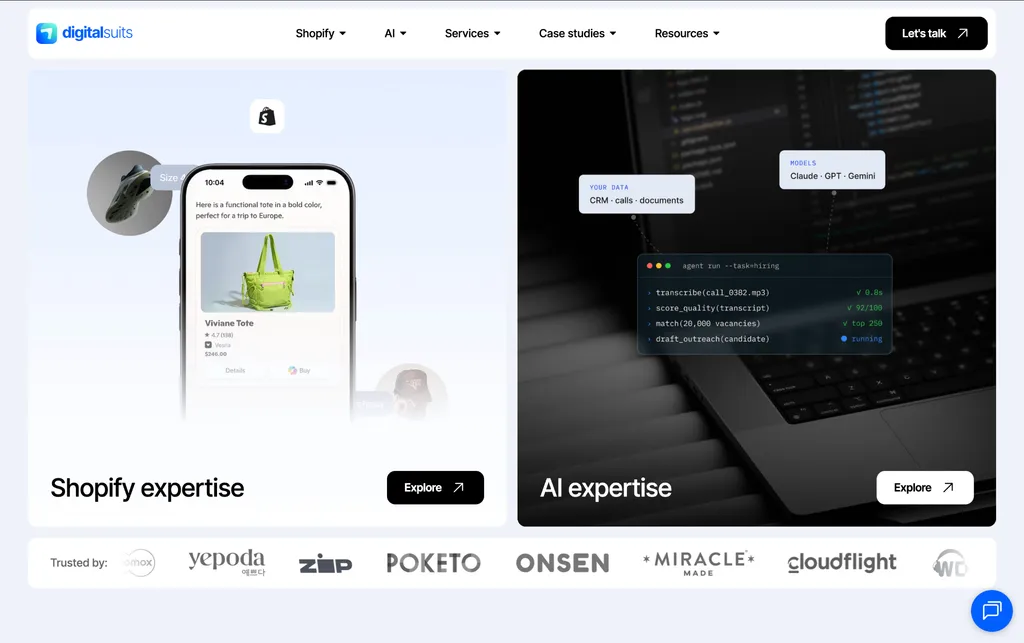
DigitalSuits specializes in Shopify Plus development, covering everything from Liquid-based theme builds to headless storefronts for brands that want a fully custom frontend. Platform migrations, most often from Magento or WooCommerce onto Shopify, make up a steady share of the work, alongside AI feature integrations such as personalized product recommendations and smarter on-site search. Founded in 2016, the agency carries a 4.9 out of 5 rating on Clutch across more than 30 client reviews.
Design, development, and post-launch support all sit with one team rather than getting split across three vendors, which matters because a lot of ecommerce projects fall apart at that handoff point, when the agency that built the site is different from whoever gets stuck maintaining it six months later. Retailers who’ve outgrown a basic Shopify theme, or who need a migration and a faster-loading headless setup in the same project, tend to be the ones reaching out.
Website: https://digitalsuits.co/
Vaimo
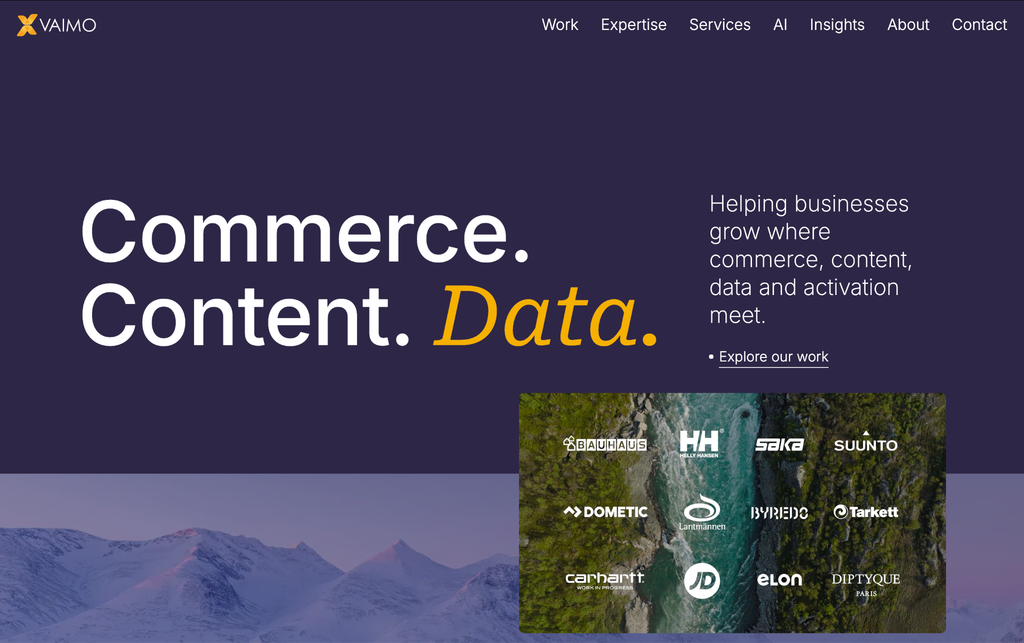
Magento, now Adobe Commerce, has been Vaimo’s main platform for most of its history, and the agency holds Global Elite Partner status with Adobe, about as high as that partnership tier goes. Shopify Plus sits alongside it as a secondary offering. Core technical strengths include PIM integrations (Akeneo, inRiver), order management systems, and ERP connections for B2B catalogs with tiered pricing.
Founded in Stockholm in 2008, the agency now runs more than 500 specialists across 15-plus countries and carries a 4.8 out of 5 rating on Clutch. Helly Hansen and Tarkett both show up in its project history, and its case studies lean toward merchants juggling several sales channels and currencies at once.
A business already on Adobe Commerce, or one considering it because Shopify’s app-based approach feels limiting for a complex B2B catalog, would get more out of Vaimo than a smaller brand with simpler needs.
Website: https://www.vaimo.com/
Astound Commerce
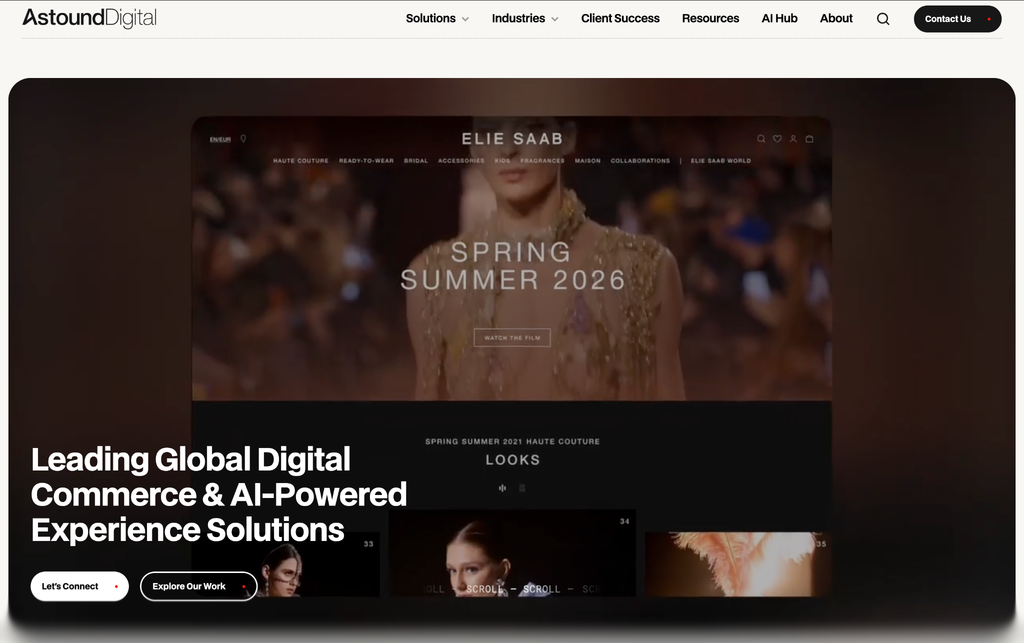
Salesforce Commerce Cloud is essentially the whole business at Astound Commerce, which holds Platinum Consulting Partner status and counts more than 350 certified architects and engineers on staff. The agency has launched over 600 Commerce Cloud sites since starting in San Francisco in 2000, and now employs well over a thousand people globally.
Orlebar Brown and Chanel are both on its project list, which says something about the tier of client it typically works with. Salesforce Commerce Cloud costs more and takes longer to implement than Shopify or BigCommerce, so Astound Commerce mostly ends up working with retailers that are already established rather than brands just getting off the ground, in exchange for a platform that can handle enormous catalogs and international storefronts without buckling under the load.
Early-stage brands will find this overkill. Retailers expanding into new markets, or managing a genuinely large, multi-region catalog, are a better match.
Website: https://astounddigital.com/
We Make Websites
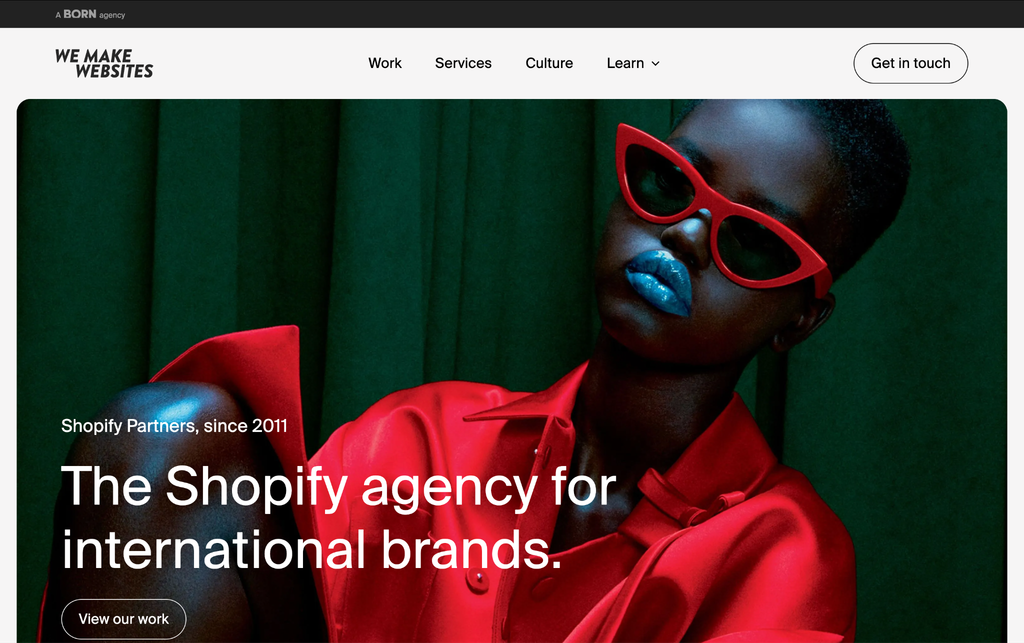
Headless Shopify builds are the speciality at We Make Websites: decoupling the frontend from Shopify’s backend and rebuilding it with frameworks like React or Next.js for speed and full design control. Founded in London in 2009, with a second office in New York, the agency has shipped more than 150 Shopify Plus stores and holds a 5.0 rating from 82 reviews on Shopify’s own Partner Directory, listed there under its parent entity, Born London Limited.
Hasbro, Condé Nast, and Hewlett-Packard have all worked with the team, brands with enough traffic to justify a fully custom frontend instead of a themed storefront. The agency also runs straightforward Shopify Plus migrations and offers dedicated QA and post-launch support, so headless isn’t the only thing it does.
Brands with a strong design vision and the traffic to back it up are the right fit; a smaller retailer just starting out probably isn’t, since headless builds cost more and take longer than a themed Shopify store.
Website: https://www.wemakewebsites.com/
Eastside Co
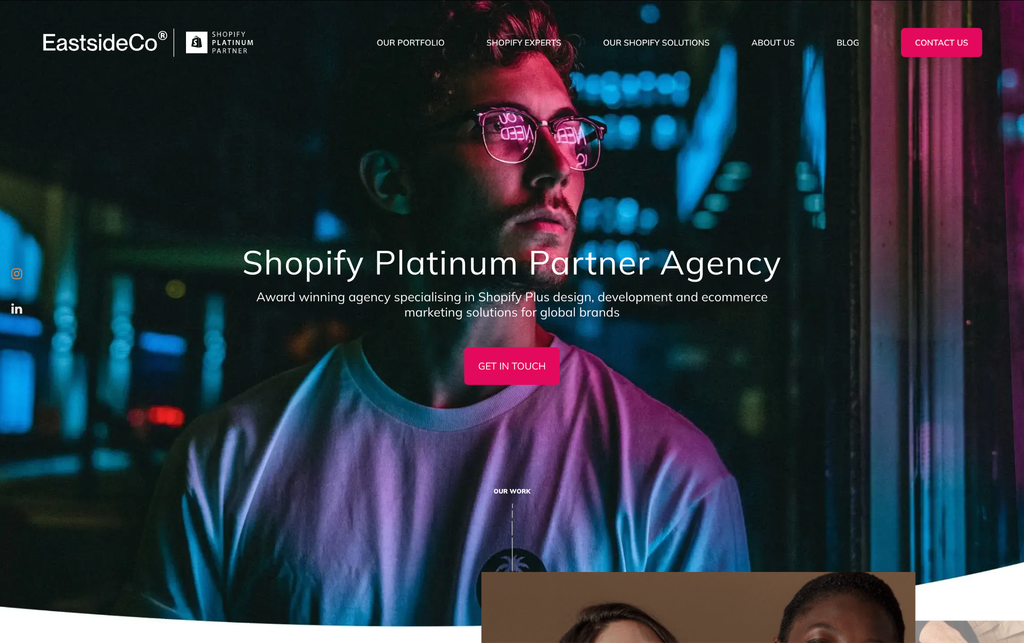
A full-service Shopify Plus agency, Eastside Co has a team of roughly 70 split across design, development, marketing, and CRO. Founded in Birmingham in 2012, it has built more than 500 Shopify sites, including around 70 Shopify Plus builds for names like Volkswagen, Unilever, and Chelsea FC.
Conversion-rate work is where its reputation is strongest, rather than treating launch day as the finish line. Plenty of Shopify Plus stores stall right after they ship: the site looks great, then nobody touches the checkout flow or product pages again for two years. Eastside Co fits retailers who already have a functioning store and want a partner focused on getting more revenue out of existing traffic, not a brand that needs a full build from zero.
Website: https://eastsideco.com/
RaftLabs
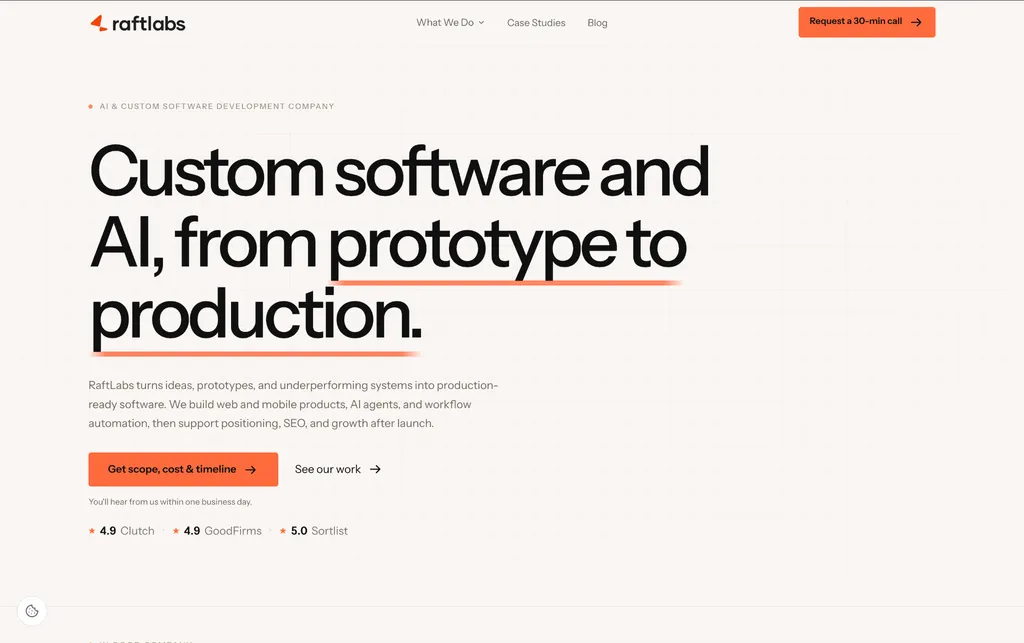
RaftLabs, founded in 2015, pairs custom Shopify development with AI-enhanced ecommerce features built on its broader product background in recommendation engines, semantic search, and demand forecasting. Automated product tagging, dynamic bundling, and backend automation that used to require manual merchandising work are typical parts of an engagement. It holds a 4.9 out of 5 rating on Clutch across more than 50 reviews, and its broader client list includes names like Vodafone and T-Mobile.
A retailer specifically chasing AI-driven features, rather than a generic theme customization, gets the most out of this specialisation. Brands that just need a standard Shopify Plus build with no AI component will likely find it beside the point.
Website: https://www.raftlabs.com/
Swanky Agency
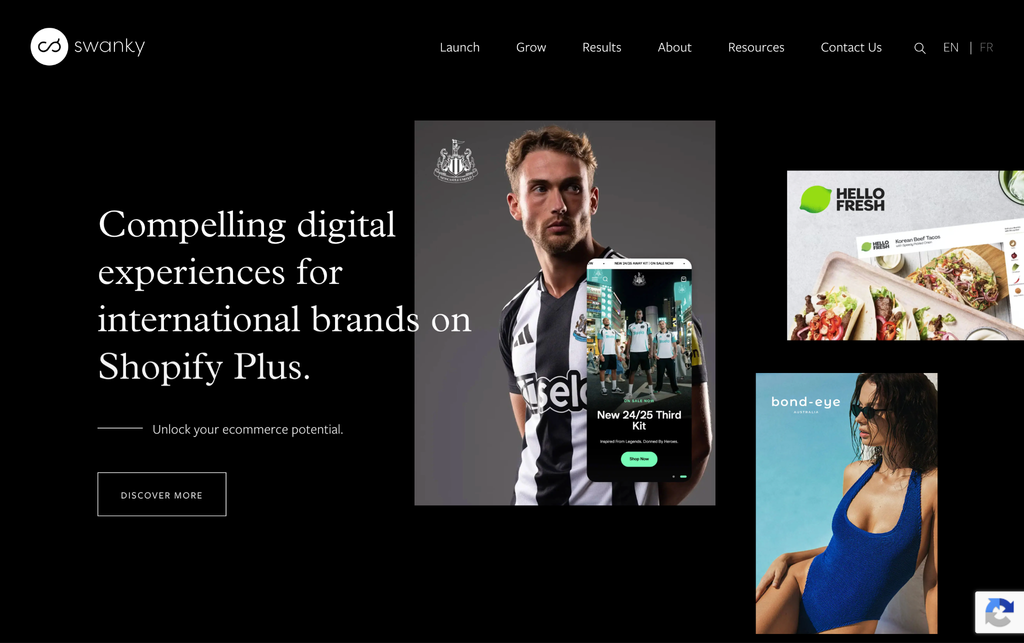
UX design, custom development, systems integrations, internationalisation, full-funnel digital marketing: Swanky Agency covers all of it under one roof for Shopify Plus clients. Founded in Exeter in 2010, it has worked exclusively on Shopify since 2012 and was one of the first three agencies in Europe to earn the Shopify Plus Expert accreditation, back in 2016. Offices in the UK, Australia, and France support enterprise and subscription brands, with particular depth in food and drink, pet care, and health and wellness.
The B2B angle deserves a mention. Most Shopify Plus agencies lean almost entirely toward DTC fashion and treat B2B functionality, tiered pricing, wholesale ordering, and account-based catalogues as an afterthought. Swanky’s dual focus means those requirements are less likely to get bolted on as an unplanned extra, though the agency’s pricing sits toward the higher end of this list.
Website: https://swankyagency.com/
Folio3
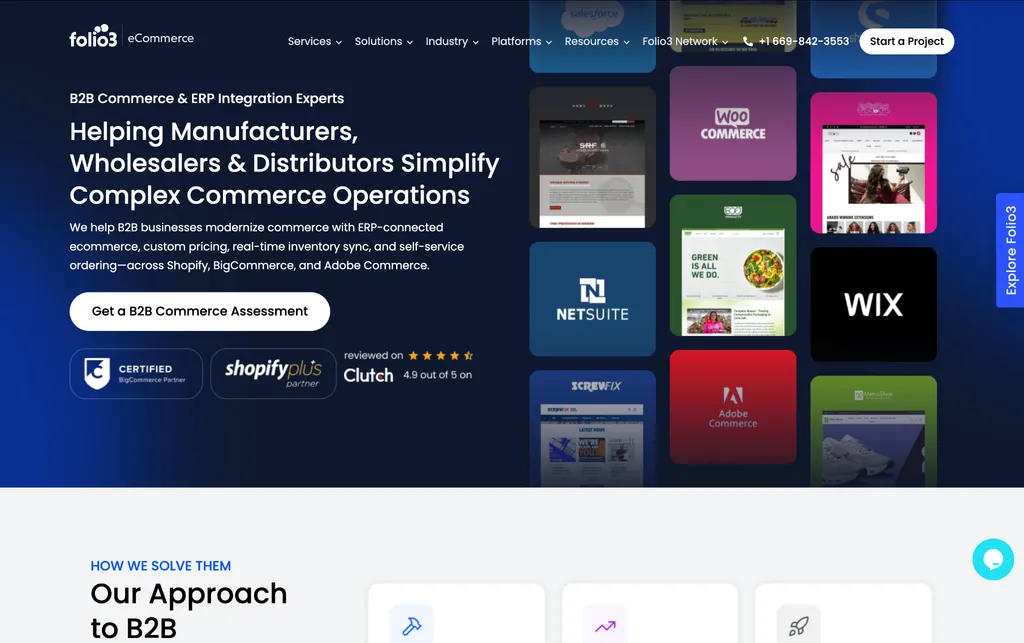
Folio3’s ecommerce division, operating under this name since 2014, builds B2B storefronts on Shopify, BigCommerce, or Adobe Commerce and connects them to ERP systems like NetSuite, SAP, and Dynamics 365, along with CRM platforms such as Salesforce. Custom pricing tiers, multi-buyer accounts, and bulk ordering workflows are standard parts of the build rather than add-ons. It holds a 4.9 out of 5 rating on Shopify’s own Partner Directory. A standard B2B storefront with ERP integration typically runs fifty thousand to a hundred fifty thousand dollars, depending on how much custom pricing logic and legacy migration work gets added.
ERP integration is usually more involved than it looks in the initial scope. Plenty of agencies can build an attractive storefront; far fewer can wire it cleanly into an existing ERP system without creating sync errors down the line. Manufacturers, distributors, and wholesalers already running an ERP and looking to add or upgrade a storefront on top of it are typically the ones who need this specific combination.
Website: https://ecommerce.folio3.com/
How to Actually Make the Call
None of the eight agencies above are interchangeable, even the ones building on the same platform. A few things decide which one actually fits, and none of them show up in a portfolio screenshot.
Start with the platform. Shopify Plus works for fast-moving brands without an overly complex catalog. Adobe Commerce and Salesforce Commerce Cloud take over once multi-currency logic or B2B pricing tiers get involved. Headless makes sense only when there’s a real design vision behind it and enough traffic to pay for the extra build time.
Ownership is the next thing to nail down, and it needs to be in the contract, not assumed. Some agencies hand over the code and the account in full once the store ships. Others keep a quiet grip through proprietary tooling, which becomes a problem the day the relationship ends. Post-launch support is the same story: get specifics on response times, what counts as a bug fix versus a billable change, and whether support is baked in or optional.
Screenshots don’t say much. Load speed on mobile, actual conversion lift, before-and-after numbers pulled from a real project: those tell you more than a homepage that looks nice. Run one through Google PageSpeed Insights if the agency won’t share the data first.
Size cuts both ways too. A small shop can undercharge and overdeliver on a simple Shopify build, then buckle the moment a multi-market Adobe Commerce migration shows up.
Pricing usually comes down to three models: fixed-fee, hourly, or retainer. None wins by default. It just has to match what the project actually needs, not whatever the agency pitches first.
Summing It Up
There’s no single right answer, and there wasn’t going to be one. Platform, budget, catalog complexity, and how much support comes bundled after launch decide the fit far more than any ranking does.
Use this as a shortlist, not a verdict. Narrow it to two or three names based on platform and the kind of client each one usually works with. Ask about ownership and support directly. Look at real numbers instead of a nice-looking homepage. The rest tends to sort itself out from there.

