In today’s software development world, delivering a product is not just a goal; it’s a must. Users want applications to work smoothly, be reliable, and have no bugs. Even a small mistake can hurt a brand’s image. Make users go away. To meet these expectations, companies use two main practices: Quality Assurance (QA) and Quality Control (QC).
Table of Contents
Many professionals in the industry use these terms interchangeably, but they are not the same. QA and QC have different goals, processes, and roles within a software team. Confusing them can create gaps in your development process and ultimately lead to a weaker product.
Understanding the difference between Quality Assurance and Quality Control is crucial for everyone involved in building software, not just testers. It’s essential for developers, project managers, and anyone building software that real people will use.
In this blog, we will explain what sets QA and QC apart. We will look at examples, explore how companies implement each practice, and find out why many teams still confuse these two concepts. By the end, you will know where each fits in the software development lifecycle and why getting it right is important for Quality Assurance and Quality Control.
What is Quality Assurance (QA)?
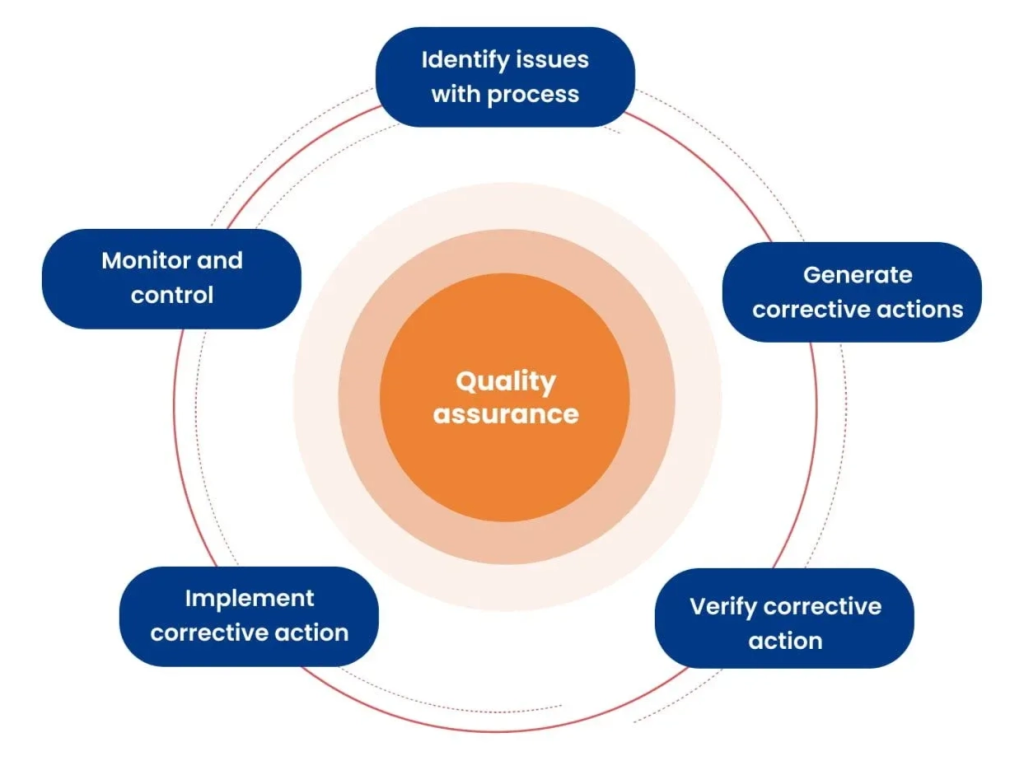
Quality Assurance (QA) is a fundamental concept in software development that focuses on ensuring the quality of a product by improving the processes used to build it. Rather than waiting for defects to appear in the final product, QA takes a proactive approach by establishing proper standards, methodologies, and workflows from the very beginning of the development lifecycle. The main objective of QA is to prevent errors before they occur, thereby reducing the chances of defects reaching the end users.
In simple terms, QA is about making sure that the right practices are followed while developing software. It ensures that all the defined approaches, techniques, and processes are implemented correctly at every stage, including requirement gathering, design, development, and testing. By continuously monitoring and improving these processes, QA helps teams maintain consistency, efficiency, and reliability in software delivery.
It is also important to understand that QA is performed before and alongside Quality Control (QC). While QC focuses on detecting and fixing defects in the final product, QA lays the foundation that helps minimize those defects in the first place. Together, they ensure that the software not only works correctly but is also built using the right approach.
Overall, advanced automated QA testing services from Aegis Softtech play a crucial role in delivering high-quality, reliable, and user-friendly software by emphasizing prevention over correction.
- Key Characteristics of QA
- Quality Assurance is focused on the process of making software.
- It tries to stop mistakes from happening.
- Focuses on improving workflows.
- Ensures standards and guidelines are followed.
- Examples of QA Activities
- Figuring out the way to write code.
- Creating test strategies.
- Checking to make sure the process is working correctly.
- Requirement reviews.
- Setting up checks to make sure the software is of quality.
Why QA Matters
Think of QA as building a strong foundation for a house. If the foundation is solid, everything built on top of it will be stable. Without proper QA, teams often find themselves constantly firefighting, fixing the same types of bugs over and over, because the root cause (a flawed process) was never addressed.That planning should also extend beyond development itself, aligning stakeholders, scheduling review sessions, and organizing discussions with a structured approach to productive review meetings can help teams identify risks earlier and keep quality initiatives on track.
In simple terms:
- QA ensures you are building the product the right way.
What is Quality Control (QC)?
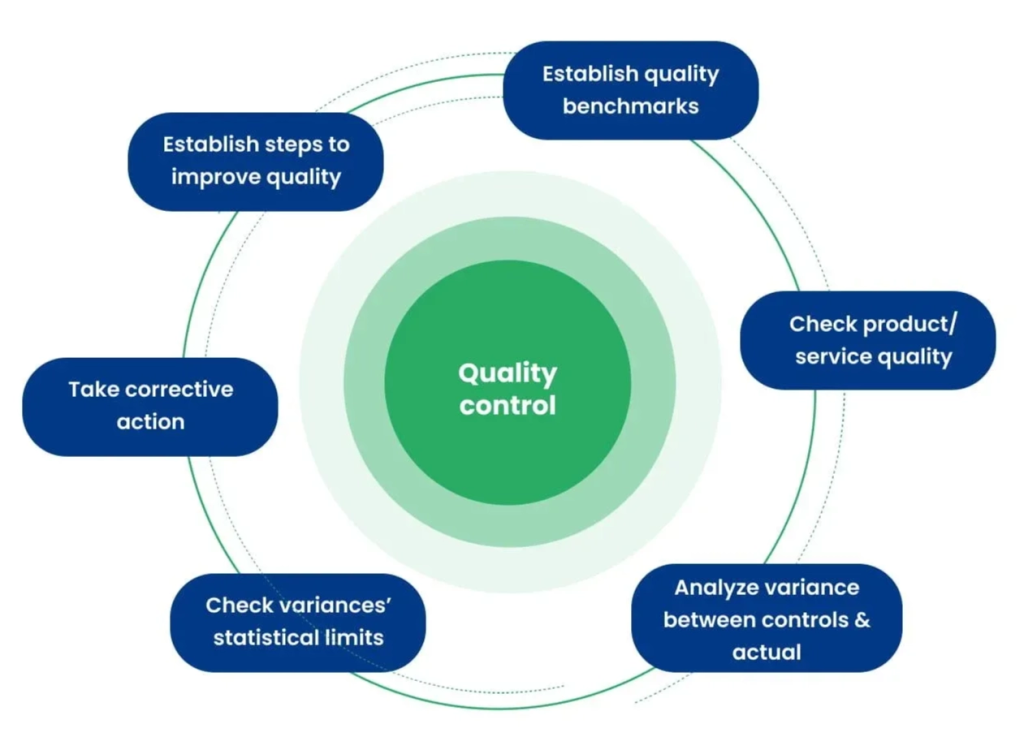
Quality Control, commonly known as QC, is a reactive approach to software development. Unlike QA, which focuses on improving processes, QC focuses on the actual product, examining and testing the software after it has been built to make sure it meets the defined quality standards before it reaches the end user.
In simple terms, QC is about finding defects in the finished or partially finished product. It operates by verifying that the software behaves exactly the way it is supposed to, catching any bugs, errors, or inconsistencies that may have slipped through during development.
If QA is about building the product the right way, then QC is about confirming the product was built correctly.
- Key Characteristics of QC
- Quality Control is focused on the product.
- It only happens when a problem is found.
- Focuses on defect detection.
- Ensures the product meets requirements.
- Examples of QC Activities
- Manual testing
- Automation testing
- Test case execution
- Bug reporting
- Regression testing
Why QC Matters
Even with the best QA processes in place, defects can still find their way into the software. That’s where QC steps in as the last line of defense. It acts as a safety net, catching issues that were missed earlier and ensuring that only a polished, fully functional product makes it to the user.
Without QC, companies risk releasing buggy software that frustrates users, damages their reputation, and costs far more to fix post-release than it would have during development.
Together, QA and QC form a powerful combination that prevents problems from occurring and ensures any that do slip through are caught and fixed in time.
In simple terms:
- QC ensures the product works correctly.
QA vs QC: Key Differences
| Factor | Quality Assurance (QA) | Quality Control (QC) |
|---|---|---|
| Definition | A process-oriented activity that ensures the right methods and standards are followed during development | A product-oriented activity that verifies the final software meets defined quality standards |
| Primary Focus | The process used to build the software | The product that is built |
| Main Goal | Prevent defects from occurring in the first place | Detect and fix defects that already exist in the product |
| Nature | Proactive acts before problems arise | Reactive acts after problems have occurred |
| Approach | Builds a framework to avoid mistakes | Tests and validates the software to find mistakes |
| Stage of SDLC | Applied before and during development | Applied after development is complete |
| Responsibility | Primarily, the testing and QC team | Primarily the testing and QC team |
| Orientation | Prevention-oriented | Detection-oriented |
| Techniques Used | Primarily, the testing and QC team | Functional testing, regression testing, UAT, bug reporting |
| Output | Improved processes, standards, and guidelines | Test reports, bug reports, and verified software |
| Cost Impact | Reduces long-term costs by preventing defects early | Catching defects late can be more costly to fix |
| Real-World Example | Defining coding standards and creating a test strategy | Executing test cases and reporting bugs found in the application |
| Type of Activity | Managerial and planning activity | Operational and execution activity |
| End Result | A well-structured, error-resistant development process | Process audits, reviews, standards definition, and walkthroughs |
QA → Process → Prevent Bugs
QC → Product → Find Bugs
QA + QC → High Quality Software
Quality Assurance vs. Quality Control Examples
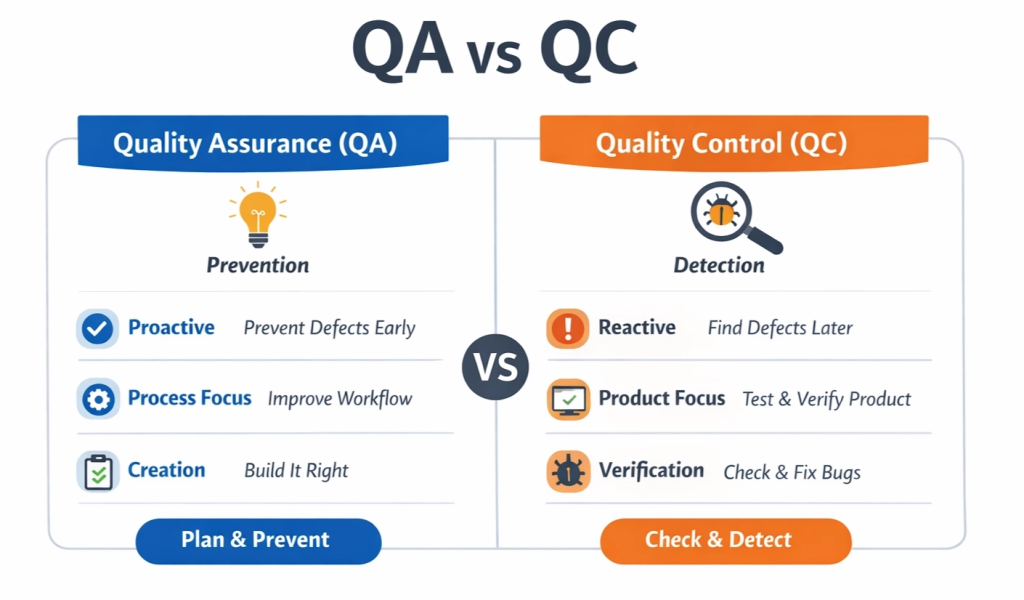
To further understand the differences between quality assurance and quality control and ensure you can embed both in harmony, you need to get a picture of how the two processes work.
Proactive (QA) vs. reactive (QC)
- Quality Assurance (QA) is a proactive methodology in software development. It ensures that software development processes are free from defects by implementing methodologies that prevent errors in requirement analysis, design, and development.
- Quality Control (QC) is a reactive methodology in software development. It ensures that software is tested and that any defects that may have occurred during development are identified and corrected.
Real Life Example:
Imagine a company building a food-delivery app like Zomato or Swiggy.
- QA (Proactive): Before a single line of code is written, the QA team sits down with developers and business analysts to define clear coding standards, review all requirements carefully, and create a detailed test strategy. They make sure everyone understands exactly how the order placement flow should work, preventing misunderstandings before development begins.
- QC (Reactive): Once the app is built, the QC team runs it through rigorous testing. They place test orders, simulate payment failures, test on different devices and network speeds, and report every bug they find, such as the cart not updating correctly or the OTP not being delivered on time.
Process (QA) vs. product (QC)
- Quality Assurance (QA) is a process-oriented methodology in software development. It ensures that proper methodologies are followed in software development by implementing software development lifecycle methodologies.
- Quality Control (QC) is a product-oriented methodology in software development. It ensures that software is developed in a way that it functions well and that it meets the requirements specified in the requirement analysis.
Real Life Example:
Consider a company building an online banking application.
- QA (Process): The QA team establishes a strict development process. Every feature must go through a code review before merging, all developers must follow secure coding guidelines, and no feature moves to the next stage without a sign-off. The focus is entirely on making the development process airtight and consistent.
- QC (Product): Once the banking app is developed, the QC team tests the actual product. They check whether fund transfers work correctly, whether account balances update in real time, whether the login session expires properly, and whether the app handles incorrect PIN entries securely. Their focus is entirely on whether the product works as expected.
Creation (QA) vs. verification (QC)
- QA is concerned with the process of creating the software. It specifies the way in which the product is developed through the establishment of guidelines and standards.
- QC is concerned with the verification of the developed product. It checks whether the developed product is meeting the business needs.
Real Life Example:
Consider a company building an e-commerce platform like Amazon or Flipkart.
- QA (Creation): During the creation phase, the QA team defines how the checkout feature should be built, what payment gateways to integrate, how error messages should be displayed, what the expected response time should be, and how edge cases like expired cards should be handled. They set the blueprint that developers follow.
- QC (Verification): After the checkout feature is built, the QC team verifies it against those original business requirements. They test whether all payment methods work, whether order confirmation emails are triggered correctly, whether discount codes apply properly, and whether the invoice generated matches the actual order, essentially confirming that what was built matches what was promised.
Check out the best free React template: Materio

This is one of the best free vercel theme you can consider for your vercel projects.
Pros and Cons Of Quality Assurance
QA Advantages
- Prevents defects early
- Improves development quality
- Saves cost in the long run
QA Limitations
- Take a lot of time, money, and effort.
- QA only works if the processes are good and everyone follows them.
- QA can slow things down and make it harder to be creative or adapt to changes.
Pros and Cons Of Quality Control?
QC Advantages
- Detects bugs before release
- Ensures product quality
- Validates functionality
QC Limitations
- Finds issues late
- Time-consuming to write and maintain test cases.
- Fixing late bugs is costly.
What Comes First: QA or QC?
QA typically comes first because it sets up the way the team works to achieve quality. QC follows to check whether the finished product actually meets that quality bar.
- QA defines standards (processes, guidelines, test strategy).
- QC validates outcomes (testing, defects, acceptance).
However, both work together continuously.
Similarities Between QA and QC
Although the difference between QA and QC is significant, they share the same ultimate goal:
- Deliver high-quality software
- Improve user experience
- Follow standards and best practices
- Reduce risks and costs
QA builds the process, and QC validates the result.
Popular Tools Used in QA & QC
To ensure software quality, teams use tools that improve collaboration, automate testing, and maintain consistency throughout development.
Tools Used in Quality Assurance (QA)
1. Jira: A project and issue tracking tool by Atlassian.
- Tracks requirements, tasks, and bugs
- Manages bug lifecycle (Open → Closed)
- Supports Agile (Scrum & Kanban)
- Enables end-to-end traceability
2. Git: A distributed version control system.
- Maintains code history and versioning
- Supports branching and collaboration
- Uses Pull Requests for code review
- Helps teams work safely in parallel
3. SonarQube: A static code analysis tool.
- Detects bugs, vulnerabilities, and code smells
- Enforces quality gates
- Tracks technical debt
- Improves code maintainability
4. Jenkins: An automation server for CI/CD pipelines.
- Automates build, test, and deployment
- Uses pipeline-as-code (Jenkinsfile)
- Runs tests and analysis in stages
- Integrates with tools like Git, Jira, Docker
Here’s a shorter, cleaner version of your QC tools content:
Tools Used in Quality Control (QC)
1. Selenium: An open-source browser automation tool.
- Automates user actions across browsers
- Supports multiple languages (Java, Python, JS, C#)
- Enables regression testing after every change
- Uses Selenium Grid for parallel testing
2. Postman: A tool for testing APIs and backend logic.
- Sends and validates API requests (GET, POST, etc.)
- Supports automated assertions
- Uses collections & environments for organization
- Ensures API contracts match frontend needs
3. Apache JMeter: A load and performance testing tool.
- Simulates real-world user traffic
- Performs load, stress, and spike testing
- Identifies system-breaking points
- Generates detailed performance reports
4. Bugzilla: An open-source defect tracking tool.
- Manages the complete bug lifecycle
- Prioritizes issues by severity
- Includes detailed reproduction steps
- Enables bug trend and defect analysis
Final Conclusion
In modern software development, QA and QC are not competing concepts; they are complementary practices. Understanding the difference between Quality Assurance and Quality Control is essential for anyone working in software development, testing, or project management.
Software Quality Assurance ensures that the right processes are in place to prevent defects from ever occurring. Software Quality Control validates that the final product meets all expectations and is ready for real users. Together, they create a balanced and effective approach to delivering high-quality, reliable software.
Whether you are a developer, tester, or project manager, applying both QA and QC in SDLC correctly will lead to better products, happier users, and more efficient teams. The key is not to choose one over the other but to understand how each plays its unique role in the bigger picture of software quality.